Thursday, 28 February 2013
Assignment: Rock Climbing Documentary
For the second assignment, we were in the same pairs and the task is too edit together a documentary about a rock climber. The documentary should allow us as an audience to empathise with the focal character with the help of the voice over. As my partner wasn't in I started sifting through the footage and found that it would be a lot harder than the previous assignment when it came to sorting out all the footage in to various bins.

Lesson: Questions and Thoughts
What is H.264?
Is the standard form for video compression, distribution and recording and is one of the most commonly used world wide, also being known as MPEG-4 AVC
Watch something with the sound off
In an Experimental class watched some colourful images that had been made via film. The movies were backed with an upbeat soundtrack that gave the images new meaning. Another cam up that was more or less the same as the others the only difference was that the sound wasn't working so we watched it in silence. It wasn't nearly as interesting as the other pieces despite them more or less being the same. Showing that sound adds more depth to the meaning or picture of a film.
Watch something with the sound off
In an Experimental class watched some colourful images that had been made via film. The movies were backed with an upbeat soundtrack that gave the images new meaning. Another cam up that was more or less the same as the others the only difference was that the sound wasn't working so we watched it in silence. It wasn't nearly as interesting as the other pieces despite them more or less being the same. Showing that sound adds more depth to the meaning or picture of a film.
Who is David Lean?
David Lean was an English film director, editor and producer who was divorced five times including once to his first cousin. He is the third most Oscar nominated director, a position he shares with two others. I have seen one of his films, Great Expectations (1946) which I can't comment a great deal about as it has been done and redone so many times that any originality it may once have had is completely lost.
David Lean was an English film director, editor and producer who was divorced five times including once to his first cousin. He is the third most Oscar nominated director, a position he shares with two others. I have seen one of his films, Great Expectations (1946) which I can't comment a great deal about as it has been done and redone so many times that any originality it may once have had is completely lost.
Monday, 25 February 2013
The Reading List: When The Shooting Stops... The Cutting Begins By Ralph Rosenblum and Robert Karen

When The Shooting Stops... The Cutting Begins: An Editors Story By Ralph Rosenblum and Robert Karen
The introduction to this book starts with one of the best and worst words lines in the media industry "Don't worry we'll fix it in the cutting room" Which is probably the best line to start with as it defines the tone of which the rest if the book is built. This is that the editor has the cinematic fate of the film in their fingers and are expected to produce gold thread with barrels of hay.
Looking at Chapter 16 in particular titled: My Problem With Directors the writer talks heavily about the egotistical world of the industry that has been pioneered by directors that are riding on the reputation of the classic forerunners of the industry ie. "Renoir, Fellini, Hitchcock and Bergman"
The chapter ends (after pages of jibes and snide marks at the work of directors) "Now it's alright to work on a loser but , which I knew I was doing, but it's torture to see solutions and and not allowed to attempt them." This says to me that although throughout production, an exclamation or two of "We'll fix it in post" may be uttered, the editor almost feels as if it is their job to be the knight in shining armour, riding a white house with a joust in one hand and a macbook in the other. Although the writer ends the chapter on "It's you Ralph. you will never be satisfied. You're incapable of it." it is said almost like an explanation for all the digs at the other professions surrounding post production, a insincere apology.
This book reads really well, [the line 'A Film Editor's Story' should have been a hint] and though it is at times quietly humorous and holds a few good hints and tips, they seem to be buried within what can only be described as either an highschool students Slam Book or the memoirs of a cynical old man. The book just seems to be nothing more than pages and pages of complaining about everyone in the industry who isn't an editor and sets up the readers.... the ones who are working to be an editor, to already hate everyone outside of their clique, and those who aren't aspiring to be a cutter to keep a close eye on the one they work with who will be silently judging them or cause a fuss to earn respect or a gift.
[Introduction: The Hands Behind The Seam (Page 1- 11) and Chapter 16: My Problem With Directors (Page 229 - 240)]
Friday, 22 February 2013
Night Journey: Post Presentation Change
After the session I decided to just make the changes that were mentioned during the assessment.

This just included adding a monotonous train sound during the carriage scenes which is the last audio track, and adjusting the sound levels to make it sound indoor and not outdoor, which is being done in the top center window. As well as that adjust various audio/soundtrack levels to balance Though it is too small to tell I moved around a few audio clips towards the end to try and make the story more understandable for the audience.I did all of this alone as Clarice wasn't in the lesson, I will have to double check that all the changes are okay with her first. We will probably come back to it a week or two before it is due with fresh eyes, after we have had time to forget it. It's no mountain climbing but it will still have Walter Murch's desired effect.

This just included adding a monotonous train sound during the carriage scenes which is the last audio track, and adjusting the sound levels to make it sound indoor and not outdoor, which is being done in the top center window. As well as that adjust various audio/soundtrack levels to balance Though it is too small to tell I moved around a few audio clips towards the end to try and make the story more understandable for the audience.I did all of this alone as Clarice wasn't in the lesson, I will have to double check that all the changes are okay with her first. We will probably come back to it a week or two before it is due with fresh eyes, after we have had time to forget it. It's no mountain climbing but it will still have Walter Murch's desired effect.
Thursday, 21 February 2013
Lesson: Presentation
After showing the finished film in class we had the following feedback
Peer Feedback
-Strong Opening
-Good use of music at the beginning and the end
-Music needs to be lowered to hear the voice over
-Creative use of flash frames
Chris
-Good structured narrative
-Voiceover gets lost towards the end
-Use an indoor train sound instead of a loop track
-The music at the end substantiates more emotion than context; but this doesn't help the characterisation. In who's head is the music playing?
-Abstract style editing
-Export in 4:3 not 16:9 because of the format it was shot in.
Some of the comments made sense and gave me something to think about and change when it came to making the adjustments for the final. Other comments I disagreed with, but understood in retrospect which is better than blindly disagreeing. Overall there are some changes that need to be made.
Peer Feedback
-Strong Opening
-Good use of music at the beginning and the end
-Music needs to be lowered to hear the voice over
-Creative use of flash frames
Chris
-Good structured narrative
-Voiceover gets lost towards the end
-Use an indoor train sound instead of a loop track
-The music at the end substantiates more emotion than context; but this doesn't help the characterisation. In who's head is the music playing?
-Abstract style editing
-Export in 4:3 not 16:9 because of the format it was shot in.
Some of the comments made sense and gave me something to think about and change when it came to making the adjustments for the final. Other comments I disagreed with, but understood in retrospect which is better than blindly disagreeing. Overall there are some changes that need to be made.
Monday, 18 February 2013
The Reading List: Scorsese on Scorsese By Ian Christie and David Thompson

Scorsese on Scorsese by Ian Christie and David Thompson
Faber and Faber/Macmillan; Revised Edition
[Based on the readings of Chapter 7 Pages 155-167 on Goodfellas]
Something I think a lot of people tend to forget, me included, is that GoodFellas (Scorsese,1990) is based on real life story which was turned into a non-fiction book called Wiseguy by Nicholas Pileggi. Pileggi helped write the screen play for this movie, but my point is that this film was so well made in its authenticity, casting and dialogue that it seems so good to be true that it must be a work of fiction. And that is what I like too call "The Scorsese Effect"
I liked the book's detail very much. So the film is more about the tangents, things off the point rather than the point itself, because I find that's more interesting. In a scene it was an experiment to see what would happen, building up to Henry's last day as a wiseguy, when he's under pressure from all side. This was the hardest to do. I wanted to create for the audience - people who have never been under the influence of anything like cocaine or amphetamines - the state of anxiety and the way the mind races when on drugs. So when Henry takes a hit of coke, the camera flying into his eyes and he doesn't know where he is for a split second. (Page 158/160)
It's interesting to read Scorsese's thought process especially over the little details. Though you know that there are little key scenes or pieces of information that have been subtly embedded into the storyworld for either authenticity or inside joke purposes regardless of audience awarenesses in various films (Disney/Pixar as a franchise are very well known for this) and how all of these emotions and ideas can be condensed and portrayed in the matter of one shot. It's an almost impossible art, that is theatrically stunning on viewing but then mindblowingly once you read the finer details and the build up to that point.
Saturday, 16 February 2013
Assignment: Final Cut
For next week me and Clarice need to have a Final Cut of our version of Night Journey.
Due to our conflicting schedules we decided to again split up the work load whereby I came in one day and looked at putting together the picture cut and Clarice came in sorted out the sound before we then found a day again to come in and put the final touches together.
Before I could get started I finally organised our subclips by putting them into bins based on location and character i.e.: Train Station, Exterior Train, Sid Only, Man Only, Sid and Man etc. (Sid is the name we gave the protagonist as Man was already reserved for the Cannibal)
The story that I had in mind when I put together the picture cut was that the main character (The man who boards the train) in delusional. He thinks that he is seeing a man that wants to kill him, but it's all in his head, he is the man who he thinks he's seeing. This is signified by the man flashing in and out when other people rush into the room when the man pulls the alarm, and also again when the conductor comes into the carriage and the cannibal disappears, leaving the conductor to only acknowledge the man. Its almost like the man is plagued by insomnia and as he falls asleep his demons disappear.
 I found pictures that I thought best portrayed this, based on facial expressions and camera movements and eye line, according to Murch's Six trying to create the most important elements; Story and Emotion by what I had to work with in the other four. I felt that the ending if nothing more helped you to relate to Sid as he looks happy and goes to sleep signifying that everything that he had seen was part of his insomniac delusions. Though the Insomnia angle may not be recognised I thought it was an important element for me to know as it helped on building the picture cut.


As Clarice's job was sound I didn't want to take over to much so only put in the three chosen soundtracks in the areas they worked with the picture cut and the development of the story and with that I was done with the final picture cut and started the rough sound edit.
 After Clarice had done what she could with the Sound which included fading in and out of the soundtracks I added in yesterday and putting together the story to match the picture with the audio clips, we both came in to fix up other little details and bounce suggestions off each other. We keep the script in the background to help us navigate the audio subclips we made of the narration which is sorted per scene, making finding the right words, phrases and sentences a lot quicker..
 I cut a segment of the static noise that was in the background of every dialogue, because where we used the dialogue was really spaced out and there was an obvious start and stop (Last audio track)
 We then went about finding sounds to fit with the exterior shots of the train, and when it was taking off from the station, fiddling about with the audio levels and the placement of the sound track as some were cut to short or fit perfectly at some points and not at all at others. By using fades in and out this helped to cover that and also created a good effect for when the train went in and out of shot.
 After all the sounds were fixed we added all the appropriate titles and listened to it both in and out of headphones. And exported it. Because the footage was 4:3 we weren't sure if we should export it in that format or just export it in 16:9 which was what we always exported it in. As it was only the presentation coming up we just exported it in 16:9 and would change it for the assessment hand in.
Due to our conflicting schedules we decided to again split up the work load whereby I came in one day and looked at putting together the picture cut and Clarice came in sorted out the sound before we then found a day again to come in and put the final touches together.
Before I could get started I finally organised our subclips by putting them into bins based on location and character i.e.: Train Station, Exterior Train, Sid Only, Man Only, Sid and Man etc. (Sid is the name we gave the protagonist as Man was already reserved for the Cannibal)
The story that I had in mind when I put together the picture cut was that the main character (The man who boards the train) in delusional. He thinks that he is seeing a man that wants to kill him, but it's all in his head, he is the man who he thinks he's seeing. This is signified by the man flashing in and out when other people rush into the room when the man pulls the alarm, and also again when the conductor comes into the carriage and the cannibal disappears, leaving the conductor to only acknowledge the man. Its almost like the man is plagued by insomnia and as he falls asleep his demons disappear.


Once I was finished I put in where the credits would go and how long it would last just to get an idea of how long the entire sequence was and to help me when I added the soundtracks that Clarice found and I chose.

As Clarice's job was sound I didn't want to take over to much so only put in the three chosen soundtracks in the areas they worked with the picture cut and the development of the story and with that I was done with the final picture cut and started the rough sound edit.
------------------------------------------------------------------------------------------------------------


Editing Review: Greys Anatomy

Edited by: Victor Du Bois and Assisted by Susan Vaill
After this weeks look at films that use voice over to gain a more active and present tense viewpoint with the audience I decided to have a look at the American TV Drama Greys Anatomy, created by Shonda Rhimes in 2005. The show has spanned over nine seasons as we watch the lives of the Surgical Interns and other residents of Seattle Grace hospital advance in their fields.
The show is narrated by Protagonist Meredith Grey (Ellen Pompeo) who uses both metaphorical, retrospective and foreshadowing dialogue to explain the direction of the episode and wrap it up at the end.
In the clip shown above taken from the pilot episode of the season we see that as she talks, visuals to emphasise metaphors and actuality are cross-faded over her. i.e.: [0:00 - 0:17] She talks about the playing field and the game, which is cross visualised with an operating room. When she says her mother was one of the greats we know that she means Surgeon and not Basketball player. She ends this clip saying that she's "Screwed" in terms of the sequence of the episode, an alarm goes off and we see a naked man on the floor (A quick shot of which is at the very beginning where we see a leg) and the protagonist/Narrator Meredith who is running late for work.
At the very end of this clip [2:25-2:50] her voice over become part of the on screen dialogue as she talks to her mother who is in a care home facility. This drags the audience out of the head space of the protagonist and allows us to get a more objective view of the episode, as opposed to the one sidedness of the narrator.
This theme of the narration turning into on screen dialogue happens again over the course of the nine seasons maybe only twice if that but the introductory, concluding and at times mid analysis of Meredith Grey stays a running theme throughout. Regardless, the narration to on-screen dialogue was unexpected but has an effect on the audience, and having the overall narration kept to the beginning and end of the show allows the audience to judge and characterise the other people without the bias-ness of Meredith's inner thoughts.
[Note: It was series creator Shonda Rhimes that suggested the addition of a voice over in the cutting room, as she felt something was missing]
Lesson: Apocalypse Now, Woody Allen and Feedback
Still looking at the use and effectiveness of voice overs to help with the editing of the Night Journey piece we look at another set of films.
A Million Feet of Film which is a documentary about the editing of Apocalypse Now and Hearts Of Darkness which is just an overall Documentary about the Making Of Apocalypse Now (Coppola, 1979). The use of voice overs in these documentary films are pretty substandard to the ones we have seen in the previous weeks. The only difference being that we are aware of who is speaking, the words of whome ever is currently speaking cross between being sync sound and narration as the edit cuts between them speaking and what they are speaking about. The interesting thing is to see how the cuts between the various speakers and even bits from the actual movie interlace. How one person mentions the name of another, and thus it cuts to them, or to them in action as a charcater also how the cuts on their dialogue is only between interesting facts, keeping the audience entertained.
Hannah and Her Sisters (Allen, 1986) where the use of voice over was described as a thought track voice over whereby the person whose voice we are listening to is describing what he thinks and feels at that current moment in time. Putting the audience into their state of mind almost immediately. This is in comparison to the retrospective voice overs we have been previously looking at.
[1.47 to 7:25]
It is interesting how this voiceover starts, whereby the character reads the line that appears in white script over a black backing which starts his monologue "God She's Beautiful". After that it is in some ways disguised as to who is speaking as all eyes are one the woman who is being talked about, until the voice talks about how she squeezed between him in the door frame and thus our wondering suspicious eyes have found our narrator, our guider of events in this film. During theses to events there is only one cut. We watch as if we the audience are the preying eyes of the narrator, the first cut ensuing when she squeezes past him, thus allowing us to get a clear look at whose head space we are invading, before it cuts back to us preying on her. Not only that but we are so enraptured by the voice especially when he notes that he is lusting over his wife's sister, that you don't notice that there are only two cuts, and we blink with them as is described in Murch;'s In The Blink Of An Eye. The more exhilarating the less blinking and thus should be correlated with the number of cuts
Other little pieces that are ensembled to help this piece include the instrumental that plays during the opening credits; You Made Me Love You by Harry James, which can be seen as foreshadowing. Another note on the sound is how the tune that plays during the monologue Stardust by Charlie Barnet is then taken from the reigns of the sound editor and becomes part of the production sequence as it is being played on the piano. A mirror of what happened with the text to speech earlier mentioned.
After taking a look at our rough cut , Chris made the following comments that we should consider when cutting for the final;
-Consider the characterization of the cannibal.
-No break in the voice over to absorb what is being said.
-Strip down the dialogue and work on the sound design.
-Dramatic moments.
-Construct a beginning that draws in the viewers.
-A shock ending.
A Million Feet of Film which is a documentary about the editing of Apocalypse Now and Hearts Of Darkness which is just an overall Documentary about the Making Of Apocalypse Now (Coppola, 1979). The use of voice overs in these documentary films are pretty substandard to the ones we have seen in the previous weeks. The only difference being that we are aware of who is speaking, the words of whome ever is currently speaking cross between being sync sound and narration as the edit cuts between them speaking and what they are speaking about. The interesting thing is to see how the cuts between the various speakers and even bits from the actual movie interlace. How one person mentions the name of another, and thus it cuts to them, or to them in action as a charcater also how the cuts on their dialogue is only between interesting facts, keeping the audience entertained.
Hannah and Her Sisters (Allen, 1986) where the use of voice over was described as a thought track voice over whereby the person whose voice we are listening to is describing what he thinks and feels at that current moment in time. Putting the audience into their state of mind almost immediately. This is in comparison to the retrospective voice overs we have been previously looking at.
[1.47 to 7:25]
It is interesting how this voiceover starts, whereby the character reads the line that appears in white script over a black backing which starts his monologue "God She's Beautiful". After that it is in some ways disguised as to who is speaking as all eyes are one the woman who is being talked about, until the voice talks about how she squeezed between him in the door frame and thus our wondering suspicious eyes have found our narrator, our guider of events in this film. During theses to events there is only one cut. We watch as if we the audience are the preying eyes of the narrator, the first cut ensuing when she squeezes past him, thus allowing us to get a clear look at whose head space we are invading, before it cuts back to us preying on her. Not only that but we are so enraptured by the voice especially when he notes that he is lusting over his wife's sister, that you don't notice that there are only two cuts, and we blink with them as is described in Murch;'s In The Blink Of An Eye. The more exhilarating the less blinking and thus should be correlated with the number of cuts
Other little pieces that are ensembled to help this piece include the instrumental that plays during the opening credits; You Made Me Love You by Harry James, which can be seen as foreshadowing. Another note on the sound is how the tune that plays during the monologue Stardust by Charlie Barnet is then taken from the reigns of the sound editor and becomes part of the production sequence as it is being played on the piano. A mirror of what happened with the text to speech earlier mentioned.
After taking a look at our rough cut , Chris made the following comments that we should consider when cutting for the final;
-Consider the characterization of the cannibal.
-No break in the voice over to absorb what is being said.
-Strip down the dialogue and work on the sound design.
-Dramatic moments.
-Construct a beginning that draws in the viewers.
-A shock ending.
Tuesday, 12 February 2013
Further Reading: Invisible Storytellers by Sarah Kozloff

Invisible Storytellers: Voice-Over Narration in American Fiction Film by Sarah Kozloff
University of California Press, 1992
We could have had a narrator telling you what to think, that's the easy way... But it's not the adult wasy... We want to make the audience think and draw their own conclusion.
Stanley Karnow, chief correspondent for "Vietnam: A television History"
In a movie you don't tell people thing, you show people things.
Willaim Goldman, Advenures in the Screen Trade
According to this doctrine, when information is told to us by a narrator, it automatically becomes tainted with subjectivity - Even ideological biases; only showing events without commentary allows spectators to have direct communion with the images and interpret their meaning and significance for themselves.
-The quotes are directly against the use of voice over as they view it as a violation against the meaning of storytelling through visuals. The source itself goes on to agree saying that anything with a narrator is "Tainted with subjectivity" I believe that they are putting to much faith in the hands of the viewer. Granted that there are people who could follow the most complicated of storylines without the use of need of a narrator, even if they have to watch it twice, look at Inception for example. On the other hand there are those who watch films for the entertainment factor not the intelligence, so does that mean that we as filmmakers should cast them out as to idiotic to view our creation? Narration is used so commonly that you don't even realise it, the fact that it doesn't bother the intellectual viewer (As we see it as another codex form to help unravel the films plot twists and enigmas before everyone else) is reason enough to allow it to guide the others.
Saturday, 9 February 2013
The Reading List: In The Blink Of An Eye by Walter Murch

This short book by Walter Murch, an american film editor who has cut films such as Apocalypse Now (Coppola, 1979), The Godfather Part III (Coppola, 1990) and Ghost (Zucker, 1990) talks about why we make cuts and what we hope to achieve with each one. May that be the effect it has one the audience or for transitional purposes. Not only that be also divulges into the length of time that it can take to make one cut, and how editors may spend days deciding.
One of the most fundamental chapters to me was Chapter 13: Don't Worry It's Only A Movie and subsequently Chapter 14: Dragnet. Both of these chapters overlap in talking about how when we blink, it can be interpreted into a cut, first noticed by Murch during his first picture cutting job, The Conversation (Coppola, 1974) and re-established when reading John Huston's interview by Louise Sweeney in Christian Science Monitor, (August 11th,1973)
""Look at the lamp acroos the room. Now look back at me. Look back at the lamp. Now look back at me again. Do you see what you did? You blinked. Those are cuts." [...] My head may move smoothly from one side of the room to the other, but, in fact, I am cutting the flow of visual images into significant bits, the better to juxtapose and compare those bits - "Lamp" and "Face" in Huston's example - without irrelevant information getting in the way" (Page 60)
This allows me to understand and think more carefully about where I make a cut in my work, cutting not only because I feel as though it is time to establish another character, face or emotion, but because I know the cutting will have a long lasting but invisible effect on the audience. Almost as if, it is seamlessly not mentioned then its natural like them selves have blinked between two objects.
Editing Review: BBC's Africa

Edited by: James Taggart (4 episodes) and Robin Lewis (2 episodes)
David Attenborough gives a running commentary throughout each episode detailing the struggles, failure, successes and intuitiveness of various animals.
The interesting this is that because each episode is based on a certain area in Africa such as...... and not the individual animal, Attenborough has to dance between talking about them using conjunctive words and phrases such as "But not every animal has it quite so lucky" or "But some animals...." the way the two stories are put together in editing is by showing scenes of various African landscapes with no narration, allowing us to take it in and absorb the information we have just before the narration starts up again over the landscapes with one of the conjunctive sentences mentioned.
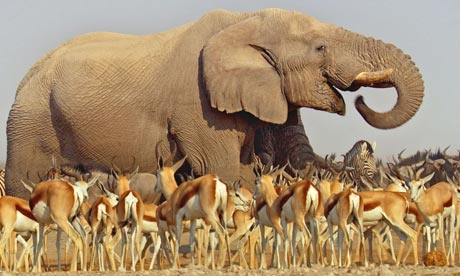
David Attenborough only makes a physical appearance at the end of the episode to do a little conclusion. This is effective as it feels like he is coming out from behind his glass wall to talk to us personally about what we can do to save these animals natural habitats, and to also tell us a few words about where the next African Location is going to be. Only in the last episode in the series does Attenbourough make a constant physical appearance, as he talks about the people and does interviews, also interacting and getting up close and personal with the animals, which is overlapped with picture cuts from various episodes in the season, which helps us the audience to feel more connected to the story as we have been following the journey of the various animals for the past six weeks.

Assignment: Rough Edit
After having finished sorting out the visual clips, me and Clarice divided the next set of tasks. I split up the audio files based on its order in the script, which we were using for a reference.


I went off to a lesson whilst Clarice focused on putting the audio and picture clips into some sort of order, as you can see on the timeline.

When I came back after my session I then went through what she had done and made some of my own suggestions and amendments on another sequence. [Blue tab was Clarice's sequence and the Red one was mine]

After a while I decided that this process would just confuse things as we were following a set guide or script, and were just arranging the imagery and or audio in preference order. I then decided it would work better and with a lot less confusion if one of us focused on the audio and another one on the picture cut. Clarice chose audio so I used the audio sequence she had put together and then used the beginning on my imagery arrangement and created a new Rough Cut sequence to work in. This worked a lot better over all and we were able to come up with a rough cut that we were both happy with ready for assessment.


Lesson: Murch, Voiceovers, Trailers
In this session we looked at Murch's six which can be found in his book In The Blink Of An Eye 2nd Edition (2001). Murch breaks down and looks at the weighting of what he believes to be important in mainstream editing.
1. Emotion - 51%
2. Story - 23%
3. Rhythm - 10%
4. Eye Trace - 7%
5. Two Dimensional Space of Action - 5%
6. Three Dimensional Space of Action - 4%
When I saw the figures I assumed that Story would have been quite highly percentiled with Emotion, with Rhythm at a near third place leaving the last three to be split between a remaining 10%. The main lesson was that we need to learn and understand the ways of mainstream editing before we can then go and break and manipulate it to our own preferred or engineered styles.
We then continued to look at some more pieces of film that uses voice over to the best effect.
GoodFellas (Scorsese 1990) is the story of the rise of Ray Liotta Henry Hill in the mobster business. Hill is looking back perspectively giving us a running commentary of his days in the business, his narration pulls the story along and sets up the visuals.
For example in this dinner scene Hill talks about the preparation of dinner during their time in the prison, He talks about Paulie slicing the garlic and there is this tight shot of him slicing it to perfection, then he moves on to talk about Vinnie and his tomato sauce and how he thinks he adds to many onion, and that's the only conversation topic for a good 30 seconds until the narration mentions something else. And so is the rhythm with not just this scene but the movie as a whole. It is a perspective tale therefore its like we see as he thinks.
As well as that the placement of the famous long take scene also works really well as it is a break from all the hustle and bustle and narration that has takne place so far, it's almost like a breather for the audience that also lets them see the world that the story takes place in in a different way.
The Third Man (Reed, 1949) [1:30 - 1:46]
This opening dialogue is effective in that the music runs with the script. It's fast paced and up beat and the cuts are methodical with the script, and just very hand to mouth. He mentions the black market, we see trading on the black market etc. It is the same system that Scorsese's GoodFellas uses but they have different effects because of the music, genre and the back story.
Later on in session we got into two groups of five and attempted to make a 30 second trailer based on any production that former students had been a part of. Working in such a group size left 3 people to gather resources, one person to find music and another person to be putting it all together. It was a trying task but we learnt that though its easier to edit alone you do at times need a director/second pair of eyes to help keep the main points in check.
1. Emotion - 51%
2. Story - 23%
3. Rhythm - 10%
4. Eye Trace - 7%
5. Two Dimensional Space of Action - 5%
6. Three Dimensional Space of Action - 4%
When I saw the figures I assumed that Story would have been quite highly percentiled with Emotion, with Rhythm at a near third place leaving the last three to be split between a remaining 10%. The main lesson was that we need to learn and understand the ways of mainstream editing before we can then go and break and manipulate it to our own preferred or engineered styles.
We then continued to look at some more pieces of film that uses voice over to the best effect.
GoodFellas (Scorsese 1990) is the story of the rise of Ray Liotta Henry Hill in the mobster business. Hill is looking back perspectively giving us a running commentary of his days in the business, his narration pulls the story along and sets up the visuals.
For example in this dinner scene Hill talks about the preparation of dinner during their time in the prison, He talks about Paulie slicing the garlic and there is this tight shot of him slicing it to perfection, then he moves on to talk about Vinnie and his tomato sauce and how he thinks he adds to many onion, and that's the only conversation topic for a good 30 seconds until the narration mentions something else. And so is the rhythm with not just this scene but the movie as a whole. It is a perspective tale therefore its like we see as he thinks.
As well as that the placement of the famous long take scene also works really well as it is a break from all the hustle and bustle and narration that has takne place so far, it's almost like a breather for the audience that also lets them see the world that the story takes place in in a different way.
The Third Man (Reed, 1949) [1:30 - 1:46]
This opening dialogue is effective in that the music runs with the script. It's fast paced and up beat and the cuts are methodical with the script, and just very hand to mouth. He mentions the black market, we see trading on the black market etc. It is the same system that Scorsese's GoodFellas uses but they have different effects because of the music, genre and the back story.
Later on in session we got into two groups of five and attempted to make a 30 second trailer based on any production that former students had been a part of. Working in such a group size left 3 people to gather resources, one person to find music and another person to be putting it all together. It was a trying task but we learnt that though its easier to edit alone you do at times need a director/second pair of eyes to help keep the main points in check.
Tuesday, 5 February 2013
Editing Review: Almost Famous

Edited by: Joe Hutshing and Saar Klein
Almost Famous Directed by Cameron Crowe in 2000 is about a 15 year old boy who gets the opportunity to interview one of his favourite bands for Rolling Stone Magazine.
The story is told through the eyes of Writer Protagonist William Miller, and you can tell that it was edited for the audience to see his new life the way he does. Though Miller is now living a faced paced life, the cuts are short and observatory, almost omnipresent. This is to highlight his role as a journalist, being caught up in the drama whilst maintaining a professional distance.

The instances where this changes is when it comes to the women in his like i.e.: His mother Elaine (Frances McDormand) His sister Anita (Zooey Deschanel) and his love interest Penny Lane (Kate Hudson)
With them everything feels close up and claustrophobic, showing his familiarity, love and focus on these individuals. The shot lingers more than necessary on these individual.
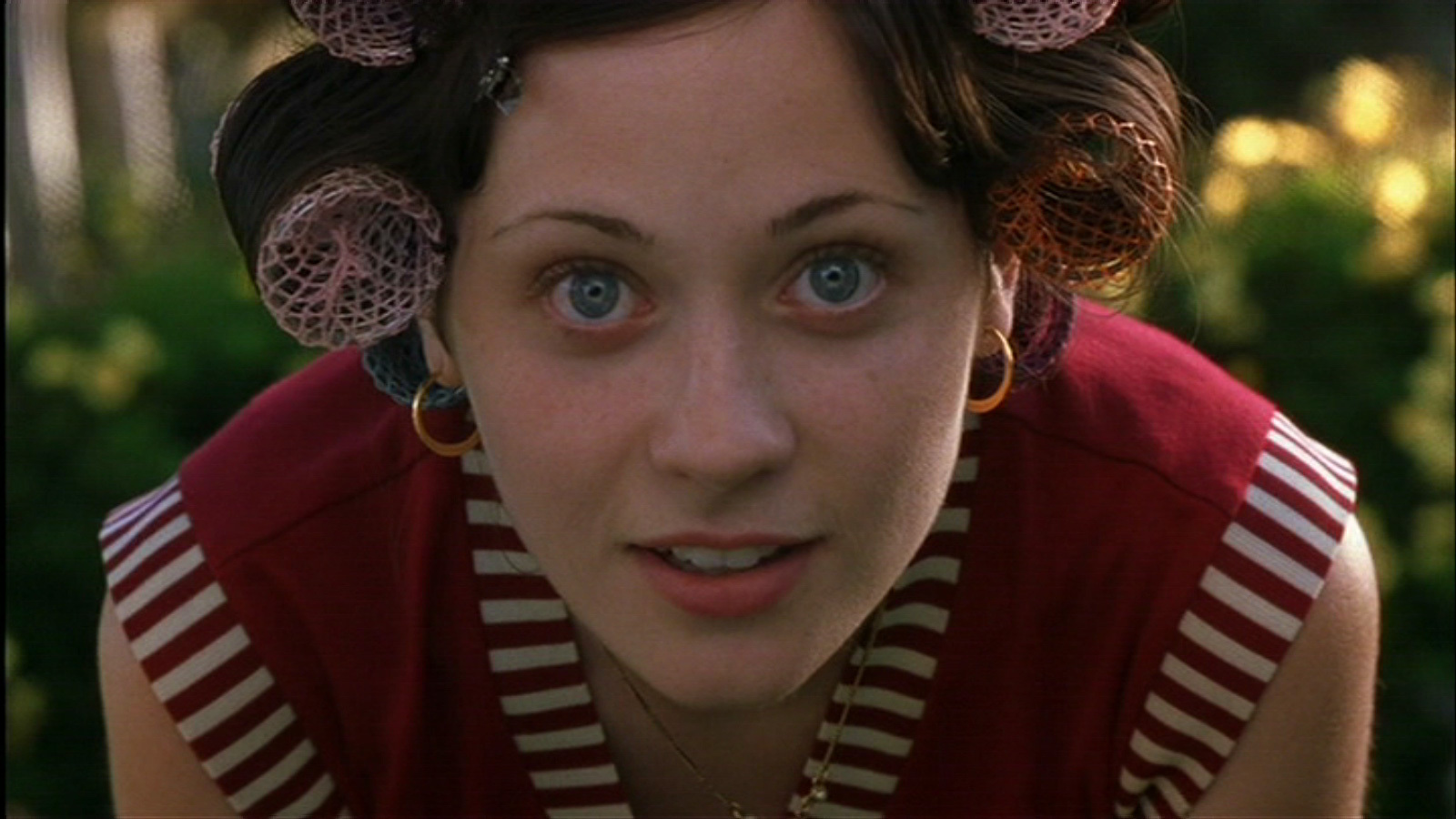
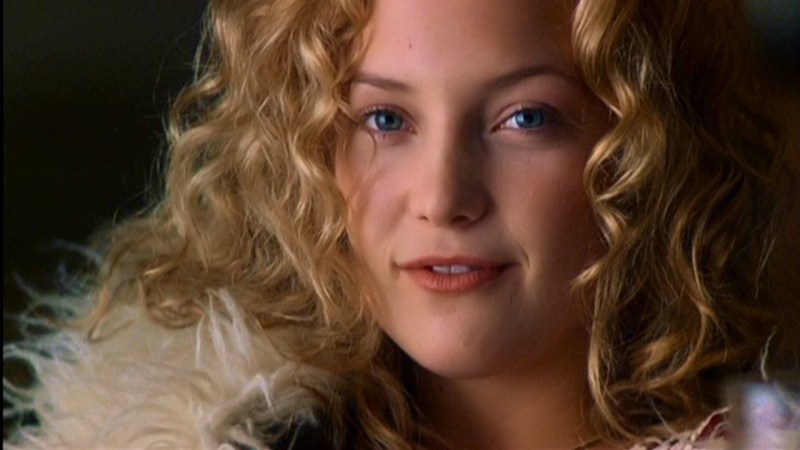
Overall there is no real distinctive technique to the editing, though it is a heavily influenced by music piece of film, there is no cutting to the music. You could reach out on a limb and go as far to say that the smooth and easy, almost liquid form of editing is due to the undercurrent of the soft 1970's rock that is omnipresent throughout. Almost.
Friday, 1 February 2013
Assignment: The First Task
The first task for this module we were put into pairs.
Me and Clarice started sub clipping the sequence which involved naming them for easy access, I learnt a few new keyboard short cuts [Command U] to sub clip and using [J K L] For rewind, stop and fast forward.
The aim for this week was just to sub clip the piece entitled "Night Journey"

 Once we had [In] and [Out] the part we wanted, we used the [Command U] short cut which created the circled new clip we had created.
 Though it is difficult to see we named each one in terms of Shot, Ext/In, Time of Day and then Description. Although it took a while it will be beneficial in the long run.
Me and Clarice started sub clipping the sequence which involved naming them for easy access, I learnt a few new keyboard short cuts [Command U] to sub clip and using [J K L] For rewind, stop and fast forward.
The aim for this week was just to sub clip the piece entitled "Night Journey"

Uploading all of the footage once the correct settings had been done to Final Cut Pro


Subscribe to:
Comments (Atom)